Greece from South Africa
Destination guide

Greece from South Africa

Ancient Athens, then the blue domes of Santorini. A low-key, aesthetically pleasing holiday built around sightseeing, walking and long lunches.

See our Greece tours

Greece Travel Guide — Tours from South Africa

Greece is a low-key, aesthetically pleasing holiday. Ancient Athens, then the blue domes of Santorini. It is built around sightseeing, walking, touring and eating well rather than adrenaline — and if that is what you want, few places do it better.

This guide covers the Schengen visa, what the two halves of the trip are actually like, what it costs in euros translated into rands, and the practical things that catch South Africans out. It comes from running our Greece departures and from the questions travellers ask us before they book.

The two halves

Athens is for history and for simply enjoying a city. The Acropolis and the Parthenon are the obvious draw, and they deserve the reputation. But the Ancient Agora, the Roman Agora, the Temple of Olympian Zeus and the Plaka neighbourhood below the Acropolis are where a lot of our travellers end up spending their favourite hours. Plaka in particular — narrow streets, tavernas, cats everywhere — is the Athens people remember.

Mount Lycabettus is worth the climb or the cable car for the panoramic view over the whole city with the Acropolis lit up below.

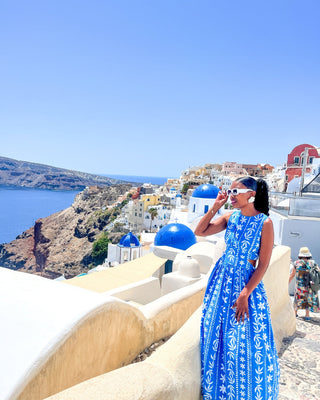
Santorini is for scenery and slowing down. It is one of the most photographed places on earth and it earns it. The island is the rim of a collapsed volcano, so the whole western side is a cliff face looking down into a flooded caldera, with white villages clinging to the top.

This is not an activity destination. You walk, you look, you eat, you swim, you take an unreasonable number of photographs. If you want adrenaline, this is not that trip.

The ferry is part of the experience

The ferry between Athens and Santorini is included in both directions, and it is a long crossing — several hours across the Aegean, passing islands the whole way.

Most people expect to endure it and end up enjoying it. Sit outside if the weather allows. It is one of the more genuinely pleasant travel days you will have on any of our tours.

What to do in Santorini

  • Oia village — the blue domes and the famous sunset. This is the photograph everyone comes for, and the sunset draws a crowd. Get there early and find a spot.
  • The Caldera yacht cruise — optional, and our most recommended extra. You sail around the caldera and swim in the volcanic waters, which are warmed from below. Genuinely unusual.
  • The volcanic beaches — Red Beach and the black sand at Perissa and Kamari. Not the white sand you may be picturing, and far more striking for it.
  • Akrotiri — a Bronze Age settlement buried by volcanic ash and preserved almost intact. Often called the Minoan Pompeii.
  • Fira for shopping, dining and the cliff walk towards Oia.

The Schengen visa

Greece is in the Schengen area, so South African passport holders need a Schengen visa. It has a reputation for being difficult, and in our experience that reputation is mostly undeserved.

Applying through the third-party centres — Capago and VFS Global — rather than going directly to an embassy tends to be quicker and more predictable, with appointment slots generally available within days.

Apply as early as you reasonably can. Not because you will be waiting, but because it gives you room to fix things: requirements change without warning, documents occasionally get sent back, and if an application is refused you can strengthen it and reapply if you still have time. Applying three weeks out leaves you no margin at all.

We supply the flight and accommodation confirmations you need, and we walk you through the rest. Full detail is in our visa guide.

What it costs

Our Greece tours start from around R39,800 per person sharing, including return flights from OR Tambo, accommodation, all breakfasts, a welcome dinner, the ferry in both directions, guided city tours and a tour leader throughout.

Budget from R8,000 in spending money, and be realistic about this one. Greece is a euro economy and lunches and dinners are not included. A casual meal runs around R250 to R400. Add site entrance fees — the Acropolis, Ancient Agora and Akrotiri all charge — plus the Caldera cruise if you want it, and any shopping.

European dining adds up faster than people expect. Plan for it rather than discovering it on day three.

Wear proper shoes

This sounds trivial and it is the single most useful thing in this guide.

There is a great deal of walking, much of it uphill on uneven stone. The path up the Acropolis is polished marble worn smooth by two and a half thousand years of feet, and it gets genuinely slippery. Oia is built into a cliff and connected by hundreds of steps.

Bring walking shoes with grip. This is not a sandals trip, and every year someone finds that out the hard way.

When to go

September is our pick. The sea is at its warmest after a summer of heating, the crowds have thinned from the August peak, and everything is still open.

May, June and October are also excellent — comfortable walking weather and reasonable prices.

Avoid July and August if you can. The Acropolis in August is punishing heat with very little shade, and Santorini is at its most crowded and most expensive.

Winter is complicated. Athens works year-round, but Santorini largely shuts down — many hotels and restaurants close entirely from November to March.

Practical things

  • No time difference from South Africa, which is a rare luxury on a European trip — no jet lag in either direction
  • Plugs are Type C and F, the European two-pin — bring an adapter
  • Tap water is safe in Athens; on Santorini most people drink bottled
  • Cards are widely accepted, but carry some cash for smaller tavernas and island shops
  • Greece is one of the safer European destinations. Ordinary city precautions in Athens, particularly around Omonia at night. Santorini is very relaxed
  • Sun protection matters — there is almost no shade at the archaeological sites

Who this trip suits

Travellers who want beauty, history and good food at a gentle pace. Photographers. Couples. Solo travellers — most of our group arrives alone, and Greece is an easy place to be by yourself.

It suits people who are happy to walk. It does not suit anyone looking for water sports, nightlife-led travel or adventure activities — for that, look at Thailand or Victoria Falls instead.

Booking and paying

Pay a R3,000 deposit online to secure your spot. We invoice the balance with a card payment link, or you settle by EFT in instalments before departure. No interest, no credit check.

Book earlier than feels necessary for Greece — not because the tour fills unusually fast, but because you need Schengen visa time. Give yourself the margin.

Greece at a glance

Flight time from Johannesburg
About 12 hours with one connection
Visa for SA passport holders
Schengen visa required. Apply early
Currency
Euro (EUR)
Language
Greek. English widely spoken
Best time to visit
May, June, September and October
Spending money guidance
From R8,000. Lunches and dinners are not included
Time difference
Same as South Africa
Plugs
Type C and F, the European two-pin

Last reviewed August 2026. Visa and entry rules change — always confirm with the embassy before booking.

When to visit Greece, month by month

MonthWeatherCrowdsPriceOur verdict
January–March Cool and wet, 6–16°C Quiet Lowest Athens is cold and many island businesses close entirely.
April–May Mild, 12–24°C Building Medium Spring. Wildflowers, comfortable walking, sea still cool.
June Warm, 20–30°C Busy Medium-high Excellent. Warm sea, long days, before peak crowds.
July–August Very hot, 24–35°C Extremely busy Highest Peak. The Acropolis in August is genuinely punishing heat.
September Warm, 20–30°C Easing Medium-high Our pick. Sea is warmest, crowds thinning, everything open.
October Mild, 16–25°C Quiet Medium Lovely and good value. Island businesses start closing late month.
November–December Cool and wet, 10–19°C Quiet Low Athens works year-round. Santorini largely shuts down.

Our Greece tours

See all Greece departures

What our travellers say

★★★★★
I’ve traveled to Dubai, Mozambique and Namibia with Thrifty Travel. Every moment of each trip was enjoyed to the fullest. The entire team from tour guides to transport team to the suppliers used are always professional. Can’t wait for my next trip with Thrifty Travel
Elisha Moonvia Google
★★★★★
Best of the best, Thrifty adventures is the best. A big thank you to our tour guide Mnr Jeff. Victoria falls, Zambia, Botswana.
Leon Mtshalivia Google
★★★★☆
Sandwich harbour on the Namibia tour was my highlight. I loved this more as the sights on the drive in the desert/on the dunes was breathtaking, and the picnic was a nice treat. The tour leaders; Sam and Jeff were awesome with my son. They really put effort in making him comfortable. I really appreciate it so much, he can't stop talking about the trip. Thank you so much …this was my 3rd trip with Thrifty and I hope to come back for more. Congratulations to you
Lerato Makhelevia Google

Greece: your questions answered

Do South Africans need a visa for Greece?

Yes — Greece is in the Schengen area, so South African passport holders need a Schengen visa.

Apply as early as you reasonably can. Through Capago or VFS the process is usually quicker than people expect, but applying early leaves room to strengthen and reapply if anything goes wrong.

What is this trip actually like?

Low-key and aesthetically pleasing rather than action-packed. It is built around sightseeing, walking, touring and eating well.

Athens is for history — the Acropolis, the ancient Agora, the Temple of Olympian Zeus — and for simply enjoying the city.

Santorini is for scenery and slowing down. If you want adrenaline, this is not that trip.

Is the ferry included?

Yes — the ferry between Athens and Santorini is included in both directions.

It is a long, pleasant crossing and genuinely part of the experience rather than just transport. Most people enjoy it more than they expect to.

What should I do in Santorini?
  • Oia village — the blue domes and the famous sunset. This is the photograph everyone comes for
  • The Caldera yacht cruise — optional, and includes swimming in the volcanic waters. Highly recommended
  • The volcanic black and red sand beaches
  • The Archaeological Site of Akrotiri
  • Fira for shopping and dining
How much walking is involved?

A lot, and much of it uphill on uneven stone. The Acropolis is a steep climb on polished marble that gets slippery, and Oia is built into a cliff with hundreds of steps.

Bring proper walking shoes with grip. This is not a sandals trip.

How much spending money do I need?

From R8,000. Lunches and dinners are not included and Greece is a euro economy — a casual meal runs around R250 to R400.

Budget for restaurant meals, site entrance fees (the Acropolis, Ancient Agora and Akrotiri all charge) and any shopping. European dining adds up quickly if you do not plan for it.

Is Greece safe for solo female travellers?

Yes — Greece is one of the safer European destinations. Ordinary city precautions in Athens, particularly around Omonia at night. Santorini is very relaxed.

Most of our group travels solo.

What is included in your Greece tour?

Return flights from OR Tambo, shared accommodation, all breakfasts, a welcome dinner, the ferry between Athens and Santorini in both directions, guided city tours, ground transport and a tour experience leader throughout.

Not included: the Caldera yacht cruise, site entrance fees, the Mount Lycabettus cable car, lunches and dinners unless stated, travel insurance and visa fees.